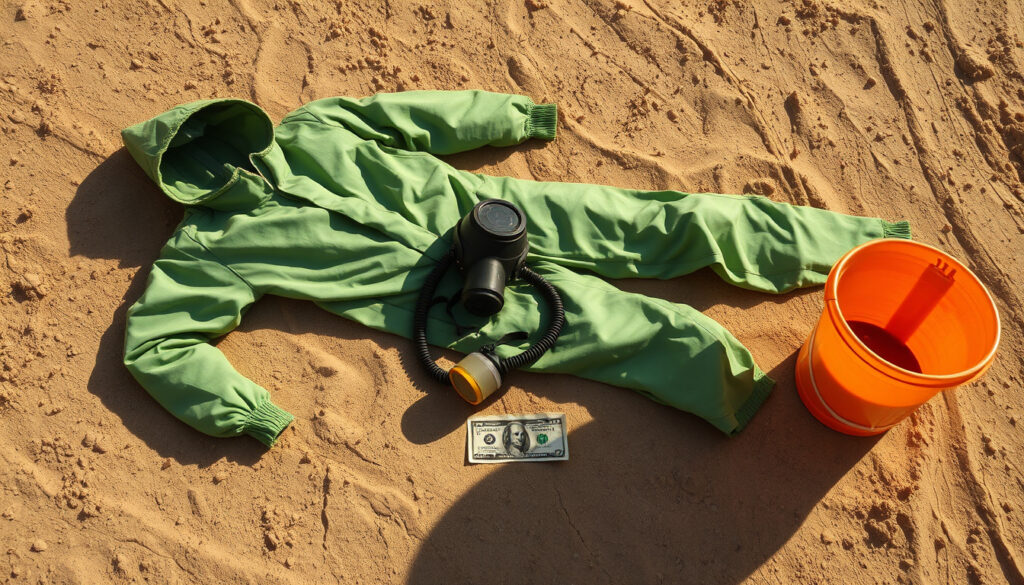
Walter White Breaking Bad: Biography, Death & Key Quotes
Few TV characters spark the kind of love-hate debate that Walter White does. You probably know the basics—high school chemistry teacher turns meth kingpin—but the real story is how a cancer diagnosis cracked open a man’s hidden pride and ambition. This article walks through his transformation, his most chilling lines, the circumstances of his death, and the continuing question of whether he was ever truly good.
Portrayed by: Bryan Cranston ·
Series run: 2008–2013 ·
Number of episodes: 62 ·
Primetime Emmy Awards won by series: 16 ·
Finale viewership (U.S.): 10.3 million
Quick snapshot
- Full name: Walter Hartwell White (Breaking Bad Wiki (Fandom))
- Portrayed by Bryan Cranston (Wikipedia)
- Diagnosed with stage III lung cancer (AMC Central Europe)
- Died in series finale “Felina” (2013) from a gunshot wound (Wikipedia)
- Whether his smile at death indicated satisfaction or regret (Claremont Review of Books)
- Whether he would have become Heisenberg without the cancer diagnosis (Waivio character analysis)
- Whether his family was his true motivation or a justification (Claremont Review of Books)
- 2008 – Diagnosed; begins cooking meth with Jesse (Wikipedia)
- 2009 – Kills Krazy-8; first murder (Breaking Bad Wiki (Fandom))
- 2010 – Heisenberg persona fully formed; kills Gus Fring (Wikipedia)
- 2013 – Dies in meth lab saving Jesse (Wikipedia)
- Walter White’s legacy continues through prequel “Better Call Saul” and the film “El Camino” (Wikipedia)
- Academic and fan debates over his morality remain active (Claremont Review of Books)
Before diving into the moral labyrinth, here are the essential facts about the man himself – six data points that anchor everything else.
| Attribute | Value |
|---|---|
| Full name | Walter Hartwell White |
| Age at death | 52 |
| Portrayed by | Bryan Cranston |
| First appearance | Pilot (2008) |
| Last appearance | Felina (2013) |
| Alias | Heisenberg |
Is Walter White good or bad?
Key arguments for Walter White as a villain
- Walter White’s actions include murder (directly or indirectly), drug manufacturing on an industrial scale, and manipulation of everyone around him (Wikipedia character page).
- By season 5, he is responsible for the deaths of at least a dozen people and the poisoning of a child (Claremont Review of Books literary analysis).
Key arguments for Walter White as a tragic hero
- His initial motivation was family financial security after a terminal cancer diagnosis (AMC series synopsis).
- Series creator Vince Gilligan famously described the transformation as “Mr. Chips into Scarface” (Wikipedia), implying a classic tragic arc.
The role of circumstance vs. choice
- Some analysts argue that Walt’s overweening pride – a classic tragic flaw – was always present, and the cancer simply gave it an outlet (Waivio character analysis).
- Others point to his strained marriage, underpaid teaching job, and son’s cerebral palsy as stacked circumstances that pushed a decent man toward darkness (Claremont Review of Books).
Walt’s most selfless act—providing for his family after his death—required him to become the very thing his family feared. By the end, they wanted nothing from him except his absence.
Why did Walt get so evil?
The cancer diagnosis as a turning point
- Walter is diagnosed with stage III lung cancer shortly after his 50th birthday (AMC Central Europe). The series makes clear that the diagnosis begins a countdown that strips away his inhibitions.
- In the pilot, he collapses at the car wash—a job he works alongside teaching—underscoring his financial desperation (Claremont Review of Books).
Ego and resentment: Walt’s pride and past regrets
- Before the show, Walt co-founded a successful research company but left after a fallout with his partners who later became multimillionaires (Wikipedia).
- The pride that drove him out of that company reappears as the Heisenberg persona—a name that becomes a brand for pure blue meth (Wikipedia).
The influence of power and the Heisenberg persona
- Key episodes mark his descent: “Ozymandias” and “Crawl Space” show Walt at his most ruthless (Wikipedia).
- His relationship with Jesse Pinkman evolves from mentorship into exploitation, with Walt manipulating Jesse’s loyalty and guilt (Reddit fan analysis).
Bryan Cranston’s performance earned four Primetime Emmy Awards, and the series itself won 16 Emmys total (TV Insider)—a reflection of the show’s ability to make Walt’s horror feel human.
What caused Walt’s death?
The machine gun scene in the finale
- In “Felina” (Season 5, Episode 16), Walt rigs an automated machine gun in his trunk to take out a neo-Nazi gang (Wikipedia).
- He dies from a gunshot wound after being hit by a ricochet from his own remote-controlled weapon (Wikipedia).
Walter White’s cancer recurrence
- By the finale, his cancer has returned and spread, leaving him visibly weak and with a short life expectancy (AMC Central Europe).
Sacrifice to save Jesse Pinkman
- Walt returns to New Mexico specifically to free Jesse from captivity and ensure the death of his captors (Wikipedia).
- He dies smiling in a meth lab—a moment that has fueled endless debate about his final state of mind (Claremont Review of Books).
Walt’s death is both a consequence of his actions and a final act of agency—he chooses the scene, the method, and the company. He dies as Heisenberg, not as Walter White.
What is Walter White’s most famous line?
“I am the one who knocks”
- From Season 4, Episode 6 “Cornered,” this line is Walt’s declaration that he is the source of danger, not its victim (Breaking Bad Wiki (Fandom)).
“Say my name”
- In Season 5, Episode 7 “Say My Name,” Walt demands recognition from a drug distributor, cementing his identity as Heisenberg (Wikipedia).
“I am not in danger, Skyler. I am the danger.”
- Also from “Cornered,” this line lays bare Walt’s transformed self-image—no longer a provider but a threat (Breaking Bad Wiki (Fandom)).
Walt’s last words: “I did it for me. I liked it.”
- In “Felina,” Walt admits to Skyler that his stated family motive was a lie; he enjoyed the power and success (Claremont Review of Books).
- This admission is widely regarded as the moment the show’s moral argument crystallizes (Waivio character analysis).
Is Breaking Bad based on a real story?
The show’s fictional nature
- Breaking Bad is a completely fictional creation by Vince Gilligan for AMC (Wikipedia). There is no real Walter White.
Real-life inspirations: the meth trade in New Mexico
- Some aspects of the drug trade depicted—particularly the use of rolling meth labs and the chemistry of blue meth—were inspired by real DEA cases in the Southwest (Wikipedia).
Similarities to actual drug lords and stories
- No single real-life drug lord matches Walter White’s arc, though elements of ambition and downfall echo figures like Pablo Escobar (Claremont Review of Books).
- The show’s setting—Albuquerque, New Mexico—is real and has seen a boost in tourism because of the series (Wikipedia).
Upsides
- Clear initial motive: providing for family after cancer diagnosis
- Relatability of a man who has been passed over and wants respect
- Bryan Cranston’s performance makes Walt’s humanity visible even at his worst
- The show forces audiences to confront their own moral judgments
Downsides
- Walts’ actions cause thousands of deaths indirectly through the drug trade
- He poisons a child (Brock) to manipulate Jesse
- He abandons his family emotionally long before they reject him
- His final admission—”I did it for me”—reveals the family motive as self-deception
What’s confirmed and what’s still debated
Confirmed facts
- Walter White died in the series finale “Felina” (Wikipedia)
- He had stage III lung cancer (AMC Central Europe)
- He murdered or caused the death of several people (Wikipedia)
- His last words were “I did it for me. I liked it.” (Claremont Review of Books)
What’s unclear
- Whether his smile at death indicated satisfaction or regret (Claremont Review of Books)
- Whether he would have become Heisenberg without the cancer diagnosis (Waivio character analysis)
- Whether his family was his true motivation or a justification (Claremont Review of Books)
Key quotes from the series
“I am the one who knocks!”
– Walter White, Season 4, Episode 6 “Cornered” (Breaking Bad Wiki (Fandom))
“Say my name.”
– Walter White, Season 5, Episode 7 “Say My Name” (Wikipedia)
“Walter’s central flaw is overweening pride; his is a classic tragic downfall.”
– Waivio character analysis (Waivio)
“The show’s central moral question is whether a man can do terrible things for good reasons and still be considered good.”
– Claremont Review of Books (Claremont Review of Books literary analysis)
Walter White’s story ends in a meth lab, bleeding from a bullet he engineered, smiling. For fans, that smile remains the final puzzle: is it relief, triumph, or the last lie Heisenberg tells himself? The show leaves the answer open, forcing each viewer to decide.
For a deeper dive into his transformation, check out this Complete Guide to Breaking Bads Iconic Character that covers every facet of Walter White’s journey.
Frequently asked questions
How old was Walter White in Breaking Bad?
He was 50 at the start of the series and 52 at his death (Breaking Bad Wiki (Fandom)).
What is Walter White’s real full name?
Walter Hartwell White (Wikipedia).
Who played Walter White?
Bryan Cranston (Wikipedia).
When was Walter White’s birthday?
The show establishes his birthday as September 7, 1958, though this is not explicitly stated in every source (Breaking Bad Wiki (Fandom)).
What does the alias Heisenberg mean?
It refers to physicist Werner Heisenberg, known for the uncertainty principle. Walt adopts the name to signal his intelligence and to obscure his identity (Wikipedia).
How many episodes did Walter White appear in?
He appeared in all 62 episodes of the series (TV Insider).
Related reading: Missing You (2025) Netflix review – Story, cast & verdict · Holly Wheeler Recast: Why the Actress Changed in Season 5
More related posts
 Perchance AI Generators: Free Chat, Roleplay, Image & Story Guide
 Gold Rate in Australia Today: 22K & 24K Prices per Gram & Ounce
 Larry Emdur: Biography, Age, Career, and Personal Life
 Links Checker: Is It Safe? How to Check URLs for Scams & Virus
 New Release Movies: Top Picks in Theaters & Streaming (2026)
 Adam Sandler Movies – Full List In Release Order
 Kourtney Kardashian: Family, Health Scare & Autosexual Rumors
 Lilydale Medical Centre – Doctors, Services, Appointments & Hours
