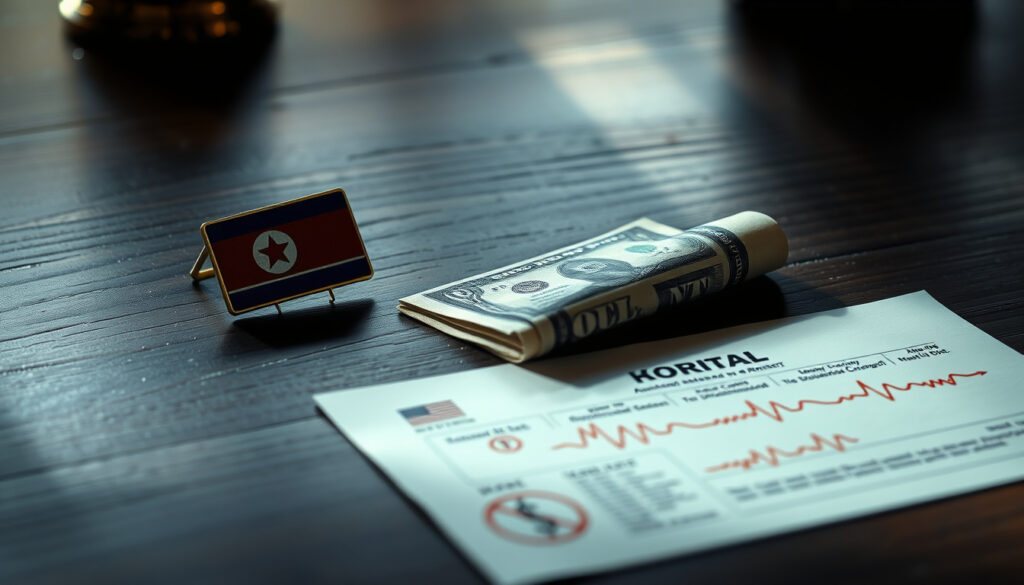
Otto Warmbier: Arrest, Coma, Death, and Compensation Fight
Few stories out of North Korea have left as many painful, unanswered questions as Otto Warmbier’s, a University of Virginia student who was arrested in January 2016 for trying to take a propaganda poster and never came home the same person. Seventeen months later, he was returned to the U.S. in a vegetative state and died within days, leaving a trail of disputed medical claims and financial aftermath.
Age at detention: 21 years old ·
Date of arrest: January 2, 2016 ·
Sentence: 15 years hard labor ·
Date of release: June 13, 2017 ·
Date of death: June 19, 2017 ·
Official U.S. autopsy finding: Hypoxic-ischemic brain injury
Quick snapshot
- Exact cause of coma and brain damage (BBC News)
- Whether North Korea’s botulism explanation is credible (BBC News)
- Whether he was mistreated or tortured (Jewish Telegraphic Agency)
- Full details of alleged $2 million payment (BBC News)
- Arrest: Jan 2, 2016 → Sentence: Mar 16, 2016 (BBC News)
- Coma: late 2016 → Release: June 13, 2017 (BBC News)
- Death: June 19, 2017 → $500M judgment: Dec 2018 (PBS NewsHour)
- Asset seizures: 2022–2023 (Axios)
Six key facts that frame the entire Otto Warmbier case — from his background to the medical findings that still divide experts.
| Label | Value |
|---|---|
| Full name | Otto Frederick Warmbier |
| Born | December 12, 1994, Cincinnati, Ohio |
| Death | June 19, 2017, Cincinnati, Ohio |
| Detention duration | 17 months (Jan 2016 – June 2017) |
| Consciousness at return | Unresponsive; minimal brain activity |
| Official U.S. cause | Hypoxic-ischemic brain injury, cause undetermined |
What caused Otto Warmbier’s coma?
North Korea’s official explanation
- North Korean officials claimed Warmbier suffered a severe neurological injury caused by cardiopulmonary arrest that cut blood supply to the brain, according to BBC News (established editorial outlet).
- They also said he contracted botulism and had a reaction to a sleeping pill — a combination they argued led to his coma.
- North Korea denied any mistreatment and called allegations of torture and beating groundless, BBC News reported.
Medical experts’ assessment
- U.S. doctors who examined Warmbier after his return found no evidence of botulism, according to BBC News.
- Dr. Daniel Kanter, a neurologist at the University of Cincinnati Medical Center who treated Warmbier, described the brain damage as severe and consistent with prolonged oxygen deprivation — but could not pinpoint a cause.
- The family’s lawsuit, filed in April 2018, alleged that North Korea repeatedly lied about the causes of Warmbier’s condition, as reported by Jewish Telegraphic Agency (established news wire).
Lack of definitive evidence
- The U.S. medical examiner’s autopsy determined that Warmbier died from hypoxic-ischemic brain injury, but the cause of that injury was listed as undetermined.
- No official source has ever confirmed whether the coma resulted from trauma, illness, neglect, or a combination of factors.
- One theory that has circulated among analysts: that Warmbier may have been beaten or tortured in detention, but no definitive evidence has been publicly produced.
North Korea’s botulism theory has been publicly rejected by U.S. doctors, yet no alternative explanation has been officially confirmed either. Eight years later, the medical cause of Otto Warmbier’s coma remains an open question — one that neither government has fully resolved.
What was the official cause of Otto Warmbier’s death?
U.S. autopsy report
- The official autopsy conducted by the Hamilton County Coroner’s Office in Ohio listed the cause of death as hypoxic-ischemic brain injury — a condition in which the brain is starved of oxygen.
- The manner of death was listed as “undetermined,” meaning the coroner could not classify it as natural, accidental, or homicide based on available evidence.
- No evidence of botulism or drug toxicity was found in the autopsy, according to BBC News.
North Korea’s statement
- North Korea’s foreign ministry publicly stated that Warmbier died from botulism combined with a sleeping pill reaction, and that cardiopulmonary arrest was the proximate cause of brain damage.
- They maintained that he received “humane medical treatment” while in detention.
- North Korean officials never released medical records or autopsy findings to support their claim.
Controversy over the cause
- The Warmbier family has publicly rejected North Korea’s account, stating they believe their son was tortured and that the regime’s explanation is a cover-up.
- The U.S. government has not endorsed North Korea’s explanation and has instead pointed to the autopsy’s undetermined finding.
- The court record from the family’s wrongful death lawsuit describes North Korean officials as having taken Warmbier “hostage to extract concessions” from the United States, according to the FindLaw case record (U.S. court document).
Why was Otto Warmbier’s brain damaged?
Possible mechanisms of injury
- The autopsy finding of hypoxic-ischemic brain injury means that at some point, Warmbier’s brain was deprived of oxygen for a sustained period.
- Possible causes of such an injury include cardiac arrest, strangulation, severe blood loss, poisoning, or prolonged seizure — but the autopsy could not determine which.
- U.S. doctors noted that the damage was diffuse and severe, consistent with a global oxygen-deprivation event rather than a localized injury.
Length of coma
- Warmbier was reportedly in a coma for more than a year before his release — from late 2016 until June 2017.
- When he arrived in Cincinnati, he was unresponsive, with minimal brain activity, and required full life support.
- He never regained consciousness and died six days after returning to the U.S.
Role of medical care in North Korea
- North Korea claimed that Warmbier received ongoing medical treatment during his coma, but provided no independent verification.
- U.S. officials and medical experts have noted that the quality of care in North Korean detention facilities is largely unknown and that delays in treatment could have contributed to the severity of his condition.
- The family’s lawsuit alleged that North Korea’s failure to provide adequate medical care constituted a form of torture, according to Jewish Telegraphic Agency.
Without access to North Korea’s detention medical logs — which the regime has never released — doctors cannot say with certainty whether Warmbier’s brain injury was caused by a treatable illness that was ignored, a deliberate act, or a combination of factors. The medical record is incomplete by design.
Did North Korea pay for Otto Warmbier?
U.S. government claim of $2 million payment
- In June 2018, U.S. officials stated that North Korea had paid $2 million to cover the cost of Warmbier’s medical care, according to BBC News.
- The payment was reportedly made after Warmbier’s release and was processed through the U.S. government.
- U.S. Secretary of State Rex Tillerson acknowledged the payment at the time, describing it as a reimbursement for medical expenses.
North Korea’s denial
- North Korea’s foreign ministry denied making any payment, calling the report “groundless.”
- The regime stated that it had no obligation to pay for Warmbier’s care and that the U.S. claim was a fabrication.
- No independent third party has confirmed whether the $2 million was actually transferred.
Purpose of payment
- If the $2 million payment occurred, it was described by U.S. officials as a reimbursement for medical expenses incurred during Warmbier’s treatment in North Korea and after his return.
- The funds reportedly went to the U.S. government, not to the Warmbier family directly.
- The payment did not constitute compensation or damages — it was framed as a practical cost recovery.
Did Otto Warmbier’s family get money?
Compensation from North Korea
- On December 24, 2018, a U.S. federal judge ordered North Korea to pay more than $500 million in a wrongful death suit filed by Warmbier’s parents, according to PBS NewsHour (established public media outlet).
- The judgment amount was $501,134,683.80, covering economic losses, medical expenses, pain and suffering, solatium, and punitive damages, per the FindLaw case record.
- The ruling described North Korea as legally and morally responsible for Warmbier’s death.
- However, the judgment was largely symbolic because there was no mechanism to force North Korea to pay, PBS NewsHour noted. North Korea did not contest the case, according to Bloomberg (financial news outlet).
Legal actions by family
- After North Korea failed to respond to the judgment, the family sought to seize North Korean assets held in the United States, WCPO (Cincinnati news outlet) reported.
- In January 2022, a U.S. court awarded the family more than $240,000 from frozen North Korean assets, according to Axios (digital news outlet).
- In 2023, a U.S. court awarded the family an additional $2.2 million in frozen North Korean funds, NK News (specialist North Korea news outlet) reported.
U.S. government support
- The family received some support from U.S. government funds, though the exact amount has not been publicly detailed.
- The alleged $2 million payment from North Korea went to the U.S. government, not the family.
- The Warmbier family has also advocated for sanctions and other measures against North Korea, keeping the case in the public eye.
The family’s $501 million judgment is legally uncollectible from North Korea itself — the regime has no assets in the U.S. that are reachable through normal means. The piecemeal seizure of frozen assets, totaling roughly $2.4 million so far, is the only tangible compensation the family has received.
Timeline of Otto Warmbier’s detention and aftermath
Seven key dates that trace the arc of the case — from a student’s arrest to a family’s long legal fight for accountability.
- January 2, 2016: Otto Warmbier arrested at Pyongyang airport while attempting to leave with a propaganda poster. (BBC News)
- March 16, 2016: Sentenced to 15 years hard labor for subversion. (BBC News)
- Late 2016: Warmbier reportedly suffered from severe illness and entered a coma. (BBC News)
- June 13, 2017: Released to U.S. custody in a vegetative state. (BBC News)
- June 19, 2017: Died at University of Cincinnati Medical Center. (BBC News)
- June 2018: U.S. government claims North Korea paid $2 million for medical expenses. (BBC News)
- 2019: Warmbier family wins $501 million default judgment against North Korea. (PBS NewsHour)
What we know for sure — and what remains unclear
Confirmed facts
- Otto Warmbier was arrested in January 2016 in North Korea (BBC News)
- He was sentenced to 15 years hard labor (BBC News)
- He was released in a coma in June 2017 and died soon after (BBC News)
- U.S. autopsy found hypoxic-ischemic brain injury (BBC News)
- Family received default judgment against North Korea (PBS NewsHour)
- Family awarded $2.2 million in frozen North Korean assets in 2023 (NK News)
What’s unclear
- Exact cause of coma and brain damage remains disputed
- Whether North Korea’s botulism explanation is credible
- Whether he was mistreated or tortured in detention
- Full details of alleged $2 million payment by North Korea
- How much the family received from U.S. government sources
Key voices in the Otto Warmbier story
“They took him hostage. They tortured him. They murdered him. And they lied about it.”
— Fred Warmbier, father of Otto Warmbier, in a statement reported by Jewish Telegraphic Agency (established news wire)
“He was in a state of unresponsiveness with minimal brain activity. The cause of his brain injury is not known.”
— Dr. Daniel Kanter, neurologist at the University of Cincinnati Medical Center, as reported by BBC News
“North Korea said Warmbier suffered a severe neurological injury and identified cardiopulmonary arrest cutting blood supply to the brain as the most likely cause.”
— North Korean foreign ministry statement, via BBC News
“The court finds that North Korea is legally and morally responsible for the death of Otto Warmbier.”
— U.S. District Judge Beryl A. Howell, December 2018 ruling, reported by PBS NewsHour (established public media outlet)
How the Otto Warmbier case fits into a wider pattern
Two other high-profile detention cases offer useful parallels — not because the facts are identical, but because they show how governments and families navigate the aftermath of a citizen being held abroad.
- Schapelle Corby: An Australian woman arrested in Bali for drug trafficking, sentenced to 20 years, and later released. Like Warmbier, her case became a diplomatic flashpoint and raised questions about the fairness of the legal process. Read more about Schapelle Corby’s case.
- George Pell: An Australian cardinal convicted of child sexual abuse, then acquitted on appeal. While the crimes are entirely different, the case illustrates how legal systems can produce conflicting outcomes and how public narrative can shift dramatically. Read more about George Pell’s case.
Summary
The Otto Warmbier case remains one of the most unresolved episodes in modern U.S.-North Korea relations. The medical question — what caused his coma and brain damage — has no agreed answer, and the two governments offer accounts that are impossible to reconcile. The financial aftermath has been a study in the limits of legal accountability: a $501 million judgment that is largely symbolic, offset by a few million dollars in seized assets. For the Warmbier family, the choice is clear: continue the long, slow process of chasing frozen assets, or accept that North Korea will never be held to account in any meaningful way.
The official North Korean explanation for his condition has been widely challenged, with many pointing to the disputed cause of his coma as a key point of contention.
Frequently asked questions
How long was Otto Warmbier in a coma?
Otto Warmbier was reportedly in a coma for more than a year — from late 2016 until his release in June 2017. He never regained consciousness and died six days after returning to the United States.
Where did Otto Warmbier die?
Otto Warmbier died at the University of Cincinnati Medical Center in Cincinnati, Ohio, on June 19, 2017, six days after being returned to the United States from North Korea.
What was Otto Warmbier’s sentence?
Otto Warmbier was sentenced to 15 years of hard labor for subversion after being convicted of stealing a propaganda poster from his hotel in Pyongyang.
Did North Korea apologize for Otto Warmbier’s death?
North Korea did not apologize for Otto Warmbier’s death. The regime maintained that he received humane medical treatment and denied any responsibility for his condition, blaming botulism and a sleeping pill reaction.
What is the U.S. government’s current stance on North Korea regarding Otto Warmbier?
The U.S. government continues to hold North Korea responsible for Otto Warmbier’s death and maintains sanctions on the regime. The State Department has supported the family’s legal efforts and has not endorsed North Korea’s medical explanation.
Did Otto Warmbier have any pre-existing health conditions?
There is no public evidence that Otto Warmbier had any pre-existing health conditions before his detention. He was a 21-year-old university student in good health at the time of his arrest.
What did Otto Warmbier’s parents do after his death?
Otto Warmbier’s parents, Fred and Cynthia Warmbier, filed a wrongful death lawsuit against North Korea in U.S. court, winning a $501 million default judgment. They have since pursued the seizure of frozen North Korean assets and have advocated for continued sanctions and accountability.
Is there any video footage of Otto Warmbier in North Korea?
North Korea released a video of Otto Warmbier reading a prepared statement during his March 2016 sentencing, in which he confessed to the crime. No other footage of him in detention has been publicly released. The video was widely circulated but its authenticity has never been independently verified.
More related posts
 Beth Mooney: WBBL Star, Stats, Net Worth & Personal Life
 Kelly Paniagua: Age, Net Worth, and Life as Julian McMahon’s Wife
 Jamal Fogarty Leaves Raiders: Manly Transfer, Salary, Family
 Rhys Bellinge jailed 10 years for fatal drunk driving crash
 Debi Mazar: Ethnicity, Madonna Friendship, Career Highlights
 Eden Sher: Sue Heck, Husband, Kids & Disability Rumors
 Adriana Lima: Bio, Virginity, Comeback, and Appearance Changes
 275 F to C – Accurate Conversion to 135 Degrees Celsius
