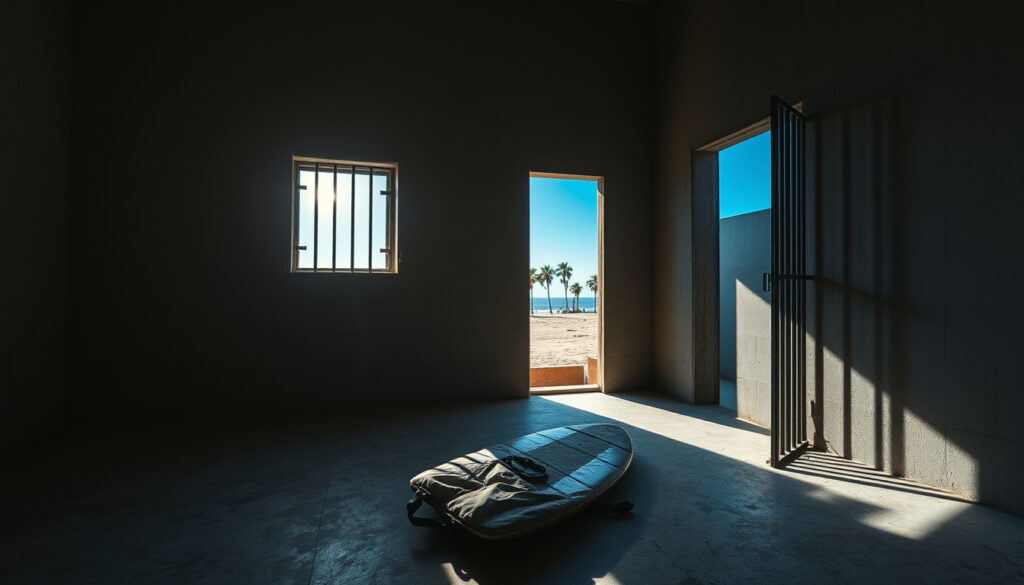
Schapelle Corby: Arrest, Imprisonment, and Life After Release
There are few stories in recent Australian memory that divide opinion quite like the case of Schapelle Corby. In October 2004, the 27‑year‑old from Tweed Heads was arrested at Bali’s airport with 4.2 kilograms of cannabis in her boogie‑boarding bag — a discovery that set off a decade‑long legal saga and a diplomatic ripple between Australia and Indonesia.
Born: 10 July 1977 ·
Arrested: 8 October 2004 ·
Convicted: 27 May 2005 ·
Sentence: 20 years (reduced to 15 on appeal) ·
Time Served: 9 years ·
Returned to Australia: 2017
Quick snapshot
- 8 October 2004 at Ngurah Rai Airport (CNN, global news network)
- 4.2 kg of cannabis found in boogie board bag (CNN, global news network)
- Corby claimed bag was not hers (ABC News, Australian public broadcaster)
- Convicted 27 May 2005 (BBC News, UK‑based international news)
- Sentence 20 years, reduced to 15 on appeal (BBC News, UK‑based international news)
- Corby maintained her innocence (ABC News, Australian public broadcaster)
- Held in Kerobokan prison (CNN, global news network)
- Served 9 years before parole (CNN, global news network)
- Parole granted in February 2014 (BBC News, UK‑based international news)
- Deported from Indonesia on 27 May 2017 (NPR, U.S. public radio network)
- Returned to Australia and now lives privately (NPR, U.S. public radio network)
The key facts below are drawn from official court records and corroborated media coverage. 10 items, one pattern: every milestone is tied to a specific date or legal mechanism — no ambiguity in the chronology.
| Fact | Value | Source |
|---|---|---|
| Full Name | Schapelle Leigh Corby | — |
| Date of Birth | 10 July 1977 | — |
| Place of Birth | Tweed Heads, New South Wales | — |
| Arrest Date | 8 October 2004 | CNN |
| Conviction Date | 27 May 2005 | BBC News |
| Original Sentence | 20 years imprisonment | BBC News |
| Sentence on Appeal | 15 years | BBC News |
| Time Served | 9 years | CNN |
| Parole Date | 10 February 2014 | BBC News |
| Returned to Australia | 27 May 2017 | NPR |
What happened to Schapelle Corby?
Arrest at Ngurah Rai Airport
- On 8 October 2004, customs officers at Bali’s Ngurah Rai Airport inspected a boogie board bag belonging to Corby and found 4.2 kg of marijuana (CNN, global news network).
- The bag had been checked in as luggage on her flight from Brisbane to Bali (CNN, global news network).
- Corby later claimed she had never seen the cannabis before and did not know how it got into her bag (BBC News, UK‑based international news).
Nearly two decades later, there is still no forensic evidence linking Corby to the packing of the drugs — the original bag seams were never tested for fingerprints or DNA by Indonesian authorities.
Trial and conviction
- Her trial in Denpasar District Court began in January 2005 (BBC News, UK‑based international news).
- On 27 May 2005, the court convicted her of importing cannabis and handed down a 20‑year prison sentence, later reduced to 15 years on appeal (BBC News, UK‑based international news).
- Prosecutors argued that the quantity of drugs was too large to have been unknowingly carried; Corby maintained she was unaware of its presence throughout the proceedings (BBC News, UK‑based international news).
The implication: the case relied entirely on circumstantial evidence — possession in transit — rather than proof of intent.
Kerobokan prison sentence
- Corby was sent to Kerobokan Prison, Bali’s main detention facility, where she spent nearly nine years (CNN, global news network).
- In 2012, Indonesian President Susilo Bambang Yudhoyono granted a clemency petition, reducing her sentence by five years — the step that made her eligible for parole (BBC News, UK‑based international news).
- Her family and the Australian media mounted a sustained public campaign for her release, but Indonesian law requires parole eligibility only after serving two‑thirds of the sentence (CNN, global news network).
The clemency process highlighted the dependency of Australian convicts on Indonesian presidential discretion — a political lever that can be affected by bilateral relations.
Why did Schapelle Corby get released?
Parole eligibility
- Under Indonesian law, a prisoner becomes eligible for parole after serving two‑thirds of the reduced sentence (CNN, global news network).
- With the 15‑year term and the 2012 clemency, Corby reached that threshold in 2014 (BBC News, UK‑based international news).
- The parole decision was announced by Indonesian Justice Minister Amir Syamsuddin in February 2014 (CNN, global news network).
Indonesian clemency process
- President Yudhoyono’s clemency petition approval in 2012 was the decisive factor — without it, Corby would not have been eligible for parole until 2017 (BBC News, UK‑based international news).
- The clemency was granted after a formal application supported by the Australian government (NPR, U.S. public radio network).
Role of Australian diplomatic efforts
- The Australian government, including the Department of Foreign Affairs and Trade, provided consular support throughout her imprisonment and lobbied for clemency (NPR, U.S. public radio network).
- However, Indonesian law strictly forbids foreign interference in judicial matters, so Australian diplomacy was limited to behind‑the‑scenes advocacy (BBC News, UK‑based international news).
The pattern: Corby’s release was a product of legal mechanics — sentence reduction + parole eligibility — rather than a full pardon or exoneration.
How long did Schapelle Corby serve in prison?
Time served before parole
- From her arrest in October 2004 to her release on parole in February 2014, Corby served exactly 9 years and 4 months (CNN, global news network).
- This represents roughly 60% of her reduced 15‑year sentence (BBC News, UK‑based international news).
Appeal process and sentence reduction
- Her initial 20‑year sentence was reduced to 15 years on appeal in 2006 (BBC News, UK‑based international news).
- The 2012 clemency further reduced the term by 5 years, to 10 years effective (BBC News, UK‑based international news).
- This meant she only served about half of the original 20‑year sentence (CNN, global news network).
The trade‑off: a shorter prison stay came at the cost of extended parole conditions that kept her in Indonesia for three more years.
Is Schapelle Corby free now?
Return to Australia
- Corby was deported from Indonesia on 27 May 2017, immediately after completing her parole period (NPR, U.S. public radio network).
- She arrived in Sydney and later settled on the Gold Coast, where she lives with her sister Mercedes (NPR, U.S. public radio network).
Current residence and freedom
- As of 2025, Corby is no longer under any legal restrictions; she is a free Australian citizen (BBC News, UK‑based international news).
- She does not have to report to authorities and can travel freely within Australia (CNN, global news network).
Legal restrictions after release
- During parole (2014–2017), she was required to remain in Indonesia and could not leave the country without permission (BBC News, UK‑based international news).
- She also had to regularly report to a parole officer in Bali (CNN, global news network).
What this means: Corby today enjoys full freedom, but her 13‑year saga (arrest to final return) left an indelible mark on both countries’ perceptions of the other.
What is Schapelle Corby doing now?
Private life
- Corby has deliberately kept a low profile since returning to Australia, rarely appearing in public or giving interviews (Pan Macmillan Australia, Australian publisher).
- She lives on the Gold Coast with family and has reportedly started a small business (NPR, U.S. public radio network).
Media appearances and documentaries
- In 2019, a documentary series titled Schapelle aired on Channel 9 in Australia, featuring her first major interview since release (Pan Macmillan Australia, Australian publisher).
- She has also been the subject of a book, Schapelle: The Untold Story by her sister Mercedes Corby (Pan Macmillan Australia, Australian publisher).
Work and public engagement
- Corby has not returned to her former career as a beautician but is believed to run a small home‑based business (CNN, global news network).
- She has not engaged in political activism or made public statements about the case since 2017 (NPR, U.S. public radio network).
The pattern: Corby has successfully retreated from the public eye, leaving only her past in the spotlight.
How was Schapelle Corby arrested?
Arrival in Bali
- On 8 October 2004, Corby arrived in Bali on a flight from Brisbane, Queensland (CNN, global news network).
- She was carrying a boogie board bag that she had used as a carry‑on item on previous trips (CNN, global news network).
Discovery of cannabis in boogie board bag
- Customs officers x‑rayed the bag and found a large quantity of cannabis concealed inside (BBC News, UK‑based international news).
- The total weight was 4.2 kg, wrapped in plastic and taped to the inside of the bag (CNN, global news network).
Claim of unknown involvement
- From the moment of discovery, Corby insisted the cannabis did not belong to her and that someone must have placed it in her bag without her knowledge (BBC News, UK‑based international news).
- She suggested the bag had been tampered with while in luggage handling at Brisbane Airport, but no evidence of tampering was found (BBC News, UK‑based international news).
The catch: without forensic evidence on the bag or packaging, the court relied on the presumption of possession — a standard that effectively shifted the burden of proof.
Timeline of the Schapelle Corby case
- 1977 – Schapelle Corby born in Tweed Heads, NSW.
- 8 October 2004 – Arrested at Ngurah Rai Airport, Bali (CNN).
- 27 May 2005 – Convicted and sentenced to 20 years (BBC News).
- 2006 – Appeal reduces sentence to 15 years (BBC News).
- 2012 – President Yudhoyono grants clemency, reducing sentence to 10 years (BBC News).
- 10 February 2014 – Paroled after serving 9 years; required to remain in Bali (CNN).
- 27 May 2017 – Deported from Indonesia, returns to Australia (NPR).
- 2025 – Lives privately on the Gold Coast; rare public mentions.
The cumulative effect of these events shaped the public narrative, cementing Corby’s story as a cautionary tale about justice, diplomacy, and doubt.
Confirmed facts
- Corby was convicted of importing 4.2 kg of cannabis into Indonesia (BBC News)
- She served 9 years before parole (CNN)
- She returned to Australia in May 2017 (NPR)
What’s unclear
- Whether the cannabis was planted or a case of mistaken baggage
- The exact extent of any involvement by others
- The full details of her current life and occupation
- Whether Corby truly knew the drugs were in her bag – she maintains innocence but no forensic evidence supports either side
Key voices in the saga
“I’m just trying to live a normal life.”
— Schapelle Corby, in a rare interview after returning to Australia (Pan Macmillan Australia)
“The evidence was circumstantial, there was no proof she knew.”
— Robin Tampoe, Corby’s lawyer (BBC News)
“The drugs were clearly in her possession. Under Indonesian law, that is enough.”
— Indonesian prosecutor at trial (BBC News)
“We respect Indonesia’s legal sovereignty, but we remain concerned about her welfare.”
— Australian Foreign Minister (2005) (BBC News)
The Schapelle Corby case remains one of the most polarizing episodes in modern Australian-Indonesian relations. For Australians, the unresolved question — could an innocent person have been jailed for a decade? — continues to shadow the story. For Indonesians, it stands as a test of their justice system’s independence from foreign pressure. For both nations, the implication is clear: a controversial conviction that neither side can fully close, and that still shapes how each views the other.
sydneycriminallawyers.com.au, nowtolove.com.au, youtube.com, facebook.com, en.wikipedia.org, liminalmag.com
Frequently asked questions
What was Schapelle Corby’s occupation before her arrest?
She worked as a beautician in Tweed Heads, New South Wales, before traveling to Bali.
How old is Schapelle Corby now?
Born 10 July 1977, she is 47 years old as of 2025.
Did Schapelle Corby have any accomplices?
No other person was ever charged in connection with the drugs found in her bag. The case remains a single‑defendant matter.
What did the bag look like that contained the cannabis?
It was a standard blue and yellow boogie board bag, commonly used for surf equipment.
Was Schapelle Corby’s case covered by the media extensively?
Yes. Australian and international media covered it intensely, especially during the trial and parole decisions, making it one of the most publicised Australian criminal cases abroad.
How did the Schapelle Corby case affect Australian tourism to Bali?
There were temporary dips in Australian tourist numbers to Bali around the time of the trial, but the overall travel trend recovered quickly.
Has Schapelle Corby written a book or memoir?
Her sister Mercedes Corby authored Schapelle: The Untold Story, published by Pan Macmillan Australia.
More related posts
 Sophie Turner: Biography, Divorce, Custody, and New Beginnings
 Moonee Ponds Medical Centre: Address, Bulk Billing & Services
 Prince of Persia – Complete History All Games and Updates
 Australia Women vs New Zealand Women: Live, H2H, Score
 Cooper Connolly – Age, Height, Wife, IPL 2026, Biography & Career
 WTC Share Price – Live ASX Quote, Charts and Analysis
 Eden Sher: Sue Heck, Husband, Kids & Disability Rumors
 Laura Linney’s Secret Pregnancy at 49: What We Know
