What Is Leave Loading – Eligibility, Calculation & Payout Guide
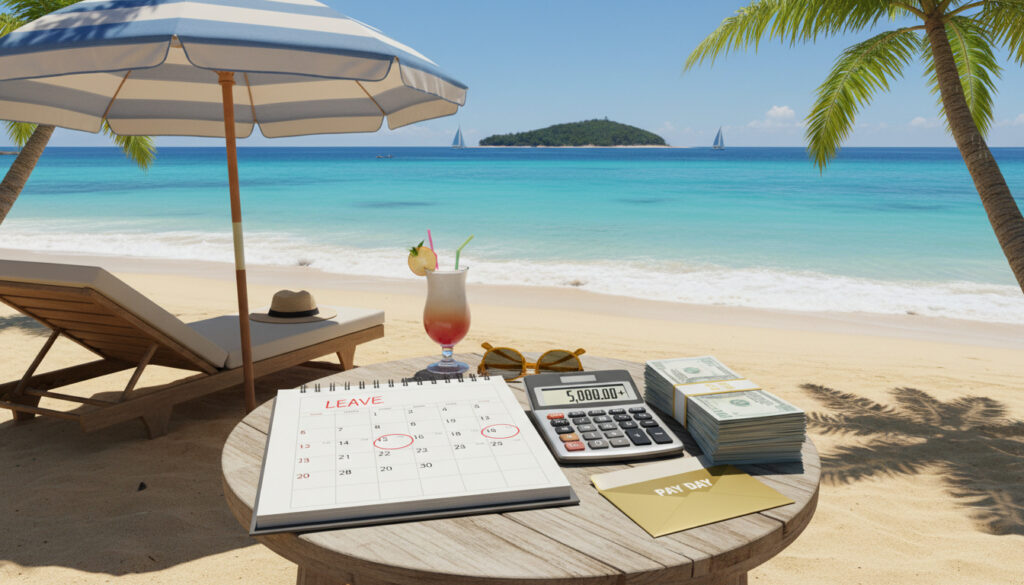
Annual leave loading is an additional payment—typically 17.5% of an employee’s base rate—added to wages when permanent staff take paid annual leave. The mechanism compensates workers for income lost through penalty rates, shift allowances, or overtime they would have earned had they remained on duty.
Embedded within Australia’s National Employment Standards (NES), leave loading operates under the Fair Work Act 2009. While the 17.5% figure is widely recognised, the entitlement stems from modern awards, enterprise agreements, or individual contracts rather than a single universal statute.
Understanding eligibility boundaries, precise calculation methods, and payout triggers helps employees verify payslip accuracy and assists employers in meeting compliance obligations.
What Is Leave Loading?
17.5% loading on annual leave pay (Australia)
Full-time, part-time; casuals excluded
17.5% of base annual leave pay
Termination or unused leave accrual
- The concept originated in 1960s industrial awards to offset lost penalty income.
- Legislated under the Fair Work Act 2009 via the NES.
- Casual employees receive a 25% casual loading instead, forfeiting annual leave entitlements.
- Taxed as ordinary income at the employee’s marginal rate.
- Employers frequently miscalculate by omitting the higher-of comparison with weekend penalties.
- No state-based variations exist; the standard applies nationally.
- Shiftworkers may accrue five weeks of leave rather than four, with loading calculated on that base.
| Attribute | Detail |
|---|---|
| Standard Rate | 17.5% |
| Legal Foundation | Fair Work Act 2009 (NES) |
| Applies To | Annual leave accruals |
| Tax Treatment | Taxable as ordinary income |
| Eligible Employees | Full-time, part-time |
| Excluded Employees | Casual employees |
| Historical Origin | 1960s industrial awards |
| Standard Annual Leave | 4 weeks (152 hours for 38-hour week) |
| Shiftworker Provision | 5 weeks for qualifying shiftworkers |
| Calculation Base | Ordinary hours at base hourly rate |
Who Is Entitled to Leave Loading?
Full-Time and Part-Time Employees
Permanent employees accrue four weeks of paid annual leave annually, or five weeks for eligible shiftworkers. Calculating annual leave loading requires applying the 17.5% rate to the base pay for the leave period, calculated on ordinary hours.
Part-time staff receive proportional entitlements based on their ordinary hours. A employee working 20 hours weekly accrues leave at one-half the full-time rate, with loading calculated strictly on those pro-rata hours.
Do Casuals Get Leave Loading?
Casual employees are excluded from annual leave loading. Under the NES, casuals do not accrue annual leave entitlements; instead, they receive a casual loading—typically 25%—compensating for the absence of paid leave.
Casual loading and annual leave loading are mutually exclusive. A worker classified as casual under their award or agreement cannot claim leave loading, even if they work regular hours.
Eligibility ultimately depends on the specific modern award or enterprise agreement. Many awards mandate the higher of 17.5% or the penalties the employee would have earned during the leave period.
How Is Leave Loading Calculated?
The Standard Formula
The baseline calculation multiplies base pay for the leave period by 0.175. Leave loading 17.5 percent explained through the Fair Work Ombudsman confirms this applies to ordinary hours only, excluding overtime.
Total pay equals base pay plus loading. For a fortnight’s leave at a base of $1,760, the loading equals $308, yielding $2,068 before tax.
Higher of 17.5 Percent or Penalties
Some awards require payment of the higher amount between the 17.5% loading and the weekend or shift penalties the employee would have earned. Katya, working 25 hours weekly at $20 per hour with a 25% Saturday penalty, receives $587.50 weekly—the sum of her $500 base plus $87.50 loading—because this exceeds her usual penalty-augmented earnings.
Always compare the 17.5% loading against actual penalties from a representative work period. Awards in hospitality, retail, and healthcare frequently trigger this higher-of clause.
The Fair Work Ombudsman’s P.A.C.T. calculator provides award-specific figures, accounting for irregular hours and penalty rate variations that manual calculations might overlook.
Employers may, under certain awards, elect to pay loading as a lump sum annually rather than per leave period, though this requires clear agreement and accurate record-keeping.
When Is Leave Loading Paid Out?
During Employment
Loading accompanies regular pay cycles when annual leave is taken. The amount appears on payslips as a separate line item or integrated total, subject to PAYG withholding at the employee’s marginal tax rate.
On Termination
Terminated employees receive payment for unused accrued annual leave, including applicable loading. The calculation follows the standard formula: accrued base pay plus 17.5%, or the award-specified equivalent.
Employers must include loading in final pay calculations for all unused annual leave. Omitting this component constitutes underpayment of accrued entitlements under the Fair Work Act.
No specific 2025 legislative alterations to termination payout calculations have been enacted; standard NES provisions continue to govern these entitlements uniformly nationwide.
How Did Leave Loading Become Standard?
- — Industrial awards introduced leave loading to compensate workers for forfeited penalty rates during vacation periods.
- — The Fair Work Act codified annual leave standards within the NES, preserving loading provisions from predecessor awards.
- — Annual indexation reviews maintain loading rates at 17.5% unless specific award variations apply.
What Is Definite and What Remains Variable?
| Established Information | Uncertain or Variable Factors |
|---|---|
| 17.5% is the national standard rate | Enterprise agreements may specify alternative methods |
| Fair Work Act 2009 governs uniformly | Industry-specific award clauses vary by sector |
| Taxed at marginal income rates | Lump-sum annual payment election availability |
| Casual employees excluded | Particular penalty rate comparison periods |
Why Does Leave Loading Exist?
Leave loading addresses a historical inequity: employees on annual leave forfeit income from penalty rates and overtime typically earned during ordinary working weeks. The 17.5% premium approximates this lost earning capacity, ensuring vacation does not result in significant pay reduction.
Australia’s system contrasts with jurisdictions lacking similar provisions, where annual leave is paid at base rates only. The loading mechanism reflects the nation’s award-based industrial relations framework, balancing employer obligations against employee income protection.
Employer compliance requires meticulous payroll configuration. Failure to apply loading correctly—or to compare it against higher penalty entitlements—exposes businesses to underpayment claims and Fair Work Ombudsman scrutiny.
Sources and Official Guidance
Annual leave loading is typically 17.5% of an employee’s base rate of pay for the leave period, calculated on their ordinary hours. Some awards require payment of the higher of the leave loading or the penalties the employee would have received.
— Fair Work Ombudsman, Calculating Annual Leave Loading
Casual employees are not entitled to annual leave or annual leave loading. Instead, they receive a casual loading (usually 25%) on top of their base rate of pay.
— Fair Work Mate, Leave Loading 17.5 Percent Explained
Key Takeaways
Leave loading represents a 17.5% wage supplement payable when permanent employees take annual leave, compensating for lost penalty income. While full-time and part-time workers accrue this entitlement under the Fair Work Act, casual employees remain ineligible, receiving separate casual loading instead. Accurate calculation requires checking whether 17.5% exceeds usual penalty rates. Calculating annual leave loading correctly ensures compliance and fair remuneration.
Frequently Asked Questions
Is leave loading taxable?
Yes. Leave loading is taxed as ordinary income at the employee’s marginal tax rate and included in PAYG withholding calculations.
What is the leave loading rate?
The standard rate is 17.5% of base pay for the leave period. Some awards require the higher of 17.5% or usual weekend and shift penalties.
Do casual employees get leave loading?
No. Casuals receive a 25% casual loading instead and do not accrue annual leave entitlements or leave loading.
How is leave loading calculated on termination?
Unused annual leave is paid out at the base rate plus 17.5% loading, or the award-specified higher amount, calculated on accrued entitlements.
Does leave loading vary by Australian state?
No. Annual leave loading is governed by federal legislation—the Fair Work Act 2009—and applies uniformly across all states and territories.
More related posts
 Golden State Warrior v Hornet Match Player Stat
 How to Find Tax File Number – Official ATO Recovery Guide
 Nissan GT-R R35: Price, Specs, Ownership Guide 2024
 RBA Interest Rate Cut – Two Hikes Reverse 2025 Easing
 Best TV Shows 2024 – Top Picks by Critics and Awards
 Emily Armstrong: New Linkin Park Singer, Biography & Controversy
 Julio Iglesias Biography: Health, Family, Net Worth 2025
 George Calombaris Wage Scandal: His Fall & Comeback
