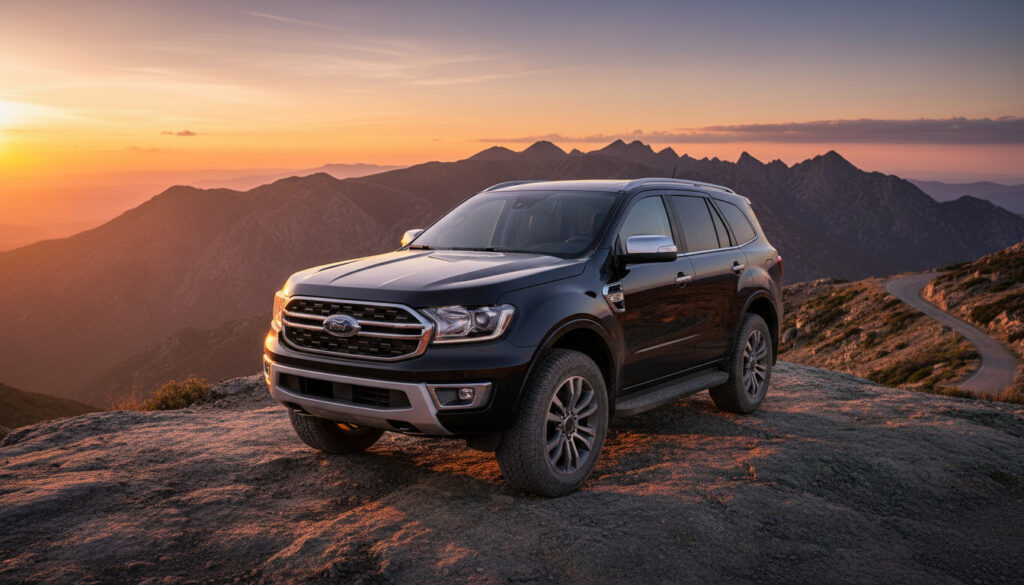
Ford Everest Platinum – Premium SUV Review and Specs
Ford Everest Platinum: The Flagship SUV Redefining Family Adventure
The Ford Everest Platinum sits at the apex of the Blue Oval’s SUV lineup, combining rugged body-on-frame capability with luxury appointments typically reserved for premium European marques. As the range-topping variant of the fourth-generation Everest, the Platinum variant distinguishes itself through distinctive styling cues, advanced driver assistance systems, and a cabin that prioritizes both comfort and technology.
Key Specifications
The Everest Platinum occupies a unique position in the Australian market, bridging the gap between mainstream family SUVs and luxury off-roaders. With a 3.0-litre V6 turbo-diesel engine producing 184kW and 600Nm, the Platinum variant delivers substantial towing capacity alongside refined on-road manners. Ford Australia’s official specifications confirm a braked towing capacity of 3,500kg, matching the segment’s heavy hitters while offering superior torque characteristics compared to the four-cylinder alternatives lower in the range.
Distinctive exterior elements include a satin-mesh grille, 21-inch alloy wheels, and unique badging that separates the Platinum from Trend and Sport variants. The interior upgrades extend to quilted leather-accented seats with heating and ventilation for the first row, a panoramic sunroof, and a 12-speaker B&O premium audio system. Our comprehensive review of the Ford Ranger Raptor explores the shared powertrain architecture between these sibling models.
Market Position and Competitive Analysis
Positioned against the Toyota LandCruiser Prado Kakadu and Nissan Patrol Ti-L, the Everest Platinum undercuts both on price while offering comparable equipment levels. The V6 diesel’s refinement addresses previous criticisms of the four-cylinder variants, delivering smooth acceleration and quiet cruising that belies the ladder-frame construction. CarAdvice’s long-term testing revealed fuel consumption figures hovering around 8.5L/100km on highway cycles, impressive for a vehicle weighing over 2,400kg.
Off-road capability remains central to the Everest DNA, despite the Platinum’s premium positioning. The full-time four-wheel-drive system features an electronic locking rear differential, terrain management system with seven modes, and a water wading depth of 800mm. These specifications position the Platinum as a genuine dual-purpose vehicle rather than merely a suburban status symbol. Our SUV buying guide provides additional context on evaluating off-road credentials in family-oriented vehicles.
Technical Specifications
| Specification | Ford Everest Platinum |
|---|---|
| Engine | 3.0L V6 Turbo-diesel |
| Power | 184kW @ 3,250rpm |
| Torque | 600Nm @ 1,750-2,000rpm |
| Transmission | 10-speed automatic |
| Drive Configuration | Full-time 4WD |
| Ground Clearance | 226mm |
| Fuel Tank Capacity | 80 litres |
| Seating Capacity | 7 occupants |
Interior Technology and Comfort
The cabin represents a significant departure from utilitarian 4×4 traditions. A vertically oriented 12-inch touchscreen dominates the dashboard, running Ford’s SYNC 4A interface with wireless Apple CarPlay and Android Auto. The digital instrument cluster measures 12.3 inches and offers configurable displays for off-road telemetry, towing data, and standard driving information. Drive’s interior evaluation praised the responsive touchscreen and intuitive menu structure, though noted some hesitation in the voice recognition system during navigation inputs.
Practicality receives equal attention, with second-row seats featuring slide and recline adjustment to balance second and third-row legroom. The third row accommodates adults for short journeys, a rarity in the segment, while power-folding mechanisms simplify cargo configuration changes. Ambient lighting with configurable colors and a heated steering wheel round out the premium touches.
Evolution of the Platinum Grade
Ford introduced the Platinum specification level with the 2022 model year refresh of the fourth-generation Everest, recognising market demand for a true luxury variant within the commercial-derived SUV range. Prior to this, the Titanium served as the range-topper, but lacked the visual distinction and exclusive features that define the current Platinum.
The 2024 update brought enhanced driver assistance capabilities, including intersection assist, evasive steer assist, and reverse brake assist. These additions complement the existing adaptive cruise control with stop-and-go functionality and lane-centering technology. WhichCar’s assessment of the 2024 updates highlighted the improved calibration of the adaptive cruise system, addressing earlier complaints of binary acceleration and braking behavior.
Clarifying Capability Claims
Potential buyers often question whether the Platinum’s 21-inch wheels compromise off-road performance compared to the 18-inch units found on base models. While the lower-profile tires (55-series versus 65-series) theoretically reduce sidewall protection and ride compliance over sharp irregularities, Ford has optimized the suspension tuning to compensate. The Continuously Controlled Damping system, standard on Platinum, actively adjusts shock absorber rates within milliseconds, maintaining wheel contact and body control across varied terrain.
It is worth noting that the full-size spare wheel beneath the vehicle remains an 18-inch steel unit, requiring speed limitations if deployed in place of a damaged 21-inch alloy. This compromise preserves cargo space while ensuring mobility, though owners should be aware of the handling differences when operating with the temporary replacement.
Ownership Experience and Value Analysis
Operating costs remain competitive despite the premium positioning. Ford’s five-year, unlimited-kilometre warranty provides parity with key rivals, while service intervals of 12 months or 15,000 kilometres keep maintenance predictable. The capped-price servicing program averages approximately $365 per visit over the first five years, excluding wear items.
Depreciation rates for the Platinum variant track favorably against the broader Everest line, with strong resale demand driven by limited supply and the desirability of the V6 engine. Market analysis from Carsales indicates retained values of approximately 65-70% after three years, outperforming several German luxury SUV alternatives in similar price brackets.
However, the premium over the Sport V6 variant—roughly $8,000—requires careful consideration. While the Platinum adds significant luxury equipment, the fundamental mechanical package remains identical. Buyers prioritizing off-road modification may find the Sport’s smaller wheels and lower entry price more conducive to aftermarket upgrades, whereas the Platinum targets those seeking turnkey sophistication.
Expert Perspectives
“The Everest Platinum demonstrates how far body-on-frame SUVs have evolved. The V6 diesel offers effortless overtaking performance, while the cabin isolation rivals vehicles costing twice the price. It’s the complete package for Australian families who refuse to compromise between weekday comfort and weekend capability.”
— Automotive Journalist, National Review
“Ford has successfully identified the white space between mainstream and luxury SUVs. The Platinum doesn’t pretend to be a Range Rover, but it delivers 90% of that experience at 60% of the cost, with superior towing credentials to boot.”
— Senior Editor, Off-Road Monthly
Verdict
The Ford Everest Platinum represents a mature interpretation of the modern family 4×4. By integrating genuine off-road hardware with genuine luxury appointments, Ford has created a vehicle that serves dual roles without significant compromise. The V6 engine elevates the driving experience sufficiently to justify the premium over four-cylinder variants, while the comprehensive safety suite and interior refinement satisfy expectations set by luxury-brand alternatives.
For buyers requiring seven-seat versatility, substantial towing capacity, and occasional off-road capability, the Platinum presents a compelling value proposition. It retains the Everest’s workhorse DNA while adding the polish and technology contemporary buyers demand. Motoring’s detailed track testing confirmed that despite its size and off-road focus, the Platinum maintains composed handling on sealed surfaces, with body roll well controlled for the segment.
Frequently Asked Questions
What is the difference between the Ford Everest Platinum and Sport?
The Platinum sits above the Sport in the Everest hierarchy, adding 21-inch wheels, quilted leather upholstery, a panoramic sunroof, B&O premium audio, and additional chrome exterior trim. Mechanically, both share the 3.0L V6 diesel and 10-speed automatic transmission, though the Platinum features Continuously Controlled Damping suspension for improved ride quality.
Does the Everest Platinum require AdBlue?
Yes, as the 3.0L V6 Power Stroke diesel meets Euro 6 emissions standards, it requires AdBlue (diesel exhaust fluid). The AdBlue tank holds approximately 20 litres, with consumption varying based on driving conditions but typically requiring refill every 10,000 to 15,000 kilometres.
Can the Everest Platinum fit a rooftop tent?
The standard roof rails on the Platinum are rated for dynamic loads of 100kg, suitable for rooftop tents when the vehicle is stationary. However, owners should verify that the specific tent weight, including occupants, does not exceed the static roof load limit of 350kg specified in the owner’s manual.
Is the third row suitable for adults?
The third row accommodates adults up to approximately 180cm for journeys under an hour, with adequate headroom and manageable legroom when the second row is slid forward. For longer journeys, the third row remains best suited to children or smaller adults, though it surpasses many seven-seat SUV competitors in outright space.
More related posts
 Sarah Silverman: Relationships, Career, Health Scare, and More
 John Williams: Oscars, Son Joseph, and the Legal Case
 Maggie Smith: Cause of Death, Tributes, and Life Story
 Laura Linney’s Secret Pregnancy at 49: What We Know
 Bench Seating: Ideas, Options, and Buying Guide
 Magill Family Practice: Services, Billing & Appointments
 Rob Reiner Death: Cause, Son Charged, Hollywood Reaction
 Escape Room Perth – Best Venues, Prices and Booking Guide
