Peripheral Nervous System: What It Is, Functions & Disorders
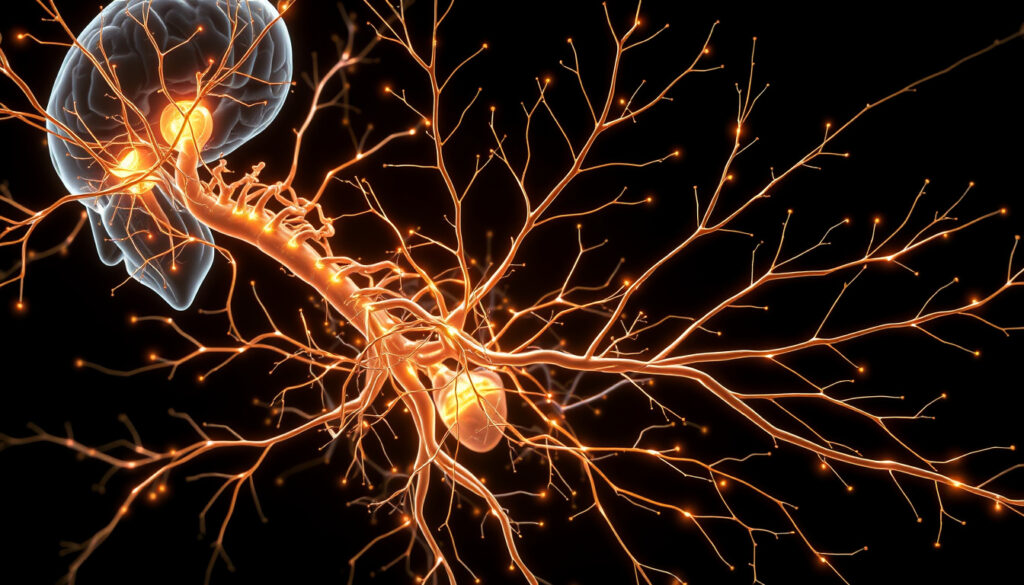
If you’ve ever touched something hot and pulled your hand back before you even thought about it, you have your peripheral nervous system to thank. This vast network of nerves branching from your brain and spinal cord handles everything from deliberate movements to the automatic rhythms that keep your heart beating and digestion running.
Location: Outside brain and spinal cord ·
Connects: CNS to limbs and organs ·
Components: Cranial nerves, spinal nerves, ganglia ·
Main role: Relay between brain/spinal cord and body
Quick snapshot
- PNS relays signals between CNS and body tissues (Kenhub)
- 12 cranial nerve pairs + 31 spinal nerve pairs form the anatomical backbone (Metropolis India)
- Demyelination and axonal damage produce distinct clinical patterns (Merck Manuals)
- Exact recovery timelines vary considerably across damage types and individual cases
- Regional variations in disorder incidence lack comprehensive global data
- Advances in electrodiagnostics and nerve imaging improving lesion localization
- Growing focus on early diabetic neuropathy screening to prevent progression
These four key facts provide the anatomical and clinical foundation for understanding peripheral nervous system structure and dysfunction.
| Label | Value |
|---|---|
| Definition | Nerves and ganglia outside brain and spinal cord |
| Primary Connection | Links CNS to limbs, organs, skin |
| Nerve Count | 12 cranial pairs + 31 spinal pairs |
| Division Types | Somatic, autonomic, enteric |
What are the three types of peripheral nervous systems?
The peripheral nervous system divides into three functional categories that handle different aspects of your body’s operation. The somatic nervous system gives you voluntary control over your skeletal muscles—every time you decide to reach for a cup or walk across a room, this division carries those commands from your brain to the right muscles.
The autonomic nervous system operates without conscious effort, managing cardiac muscle, smooth muscle in organs, and glandular tissue. It further splits into three branches: sympathetic, parasympathetic, and enteric (Kenhub). The sympathetic division primes your body for action by increasing heart rate and blood pressure while decreasing digestive activity. The parasympathetic division does the opposite, promoting rest and recovery. The enteric division operates somewhat independently, regulating digestive tract function.
Your body switches between sympathetic and parasympathetic modes constantly throughout the day—a traffic jam triggers sympathetic activation while a quiet evening meal activates parasympathetic dominance.
Somatic nervous system
The somatic system connects your central nervous system to skeletal muscles through motor neurons and carries sensory information back through afferent fibers. Every deliberate action you take—from typing to running—depends on this pathway. Sensory nerves transmit information from skin, joints, and muscles to your brain and spinal cord, while motor nerves carry commands in the opposite direction (Cleveland Clinic).
Autonomic nervous system
Three branches define the autonomic nervous system’s operation. The sympathetic branch prepares the body for increased activity through vasoconstriction, pupil dilation, increased heart rate, and elevated blood pressure (Kenhub). The parasympathetic branch opposes these effects, promoting rest and digestive function. The enteric branch, sometimes called the “second brain,” independently regulates gastrointestinal activity.
Enteric nervous system
The enteric nervous system contains roughly 500 million neurons and operates with considerable autonomy from the rest of the autonomic system. It controls digestion independently through local reflexes, managing peristalsis, secretion, and blood flow to intestinal tissues.
What are the four functions of the peripheral nervous system?
The peripheral nervous system serves as the body’s communication superhighway, performing four primary functions that keep you operating effectively in your environment. These functions work continuously, often simultaneously, managing everything from immediate reflex responses to long-term physiological balance.
Sensory input
Sensory nerves constantly gather information from throughout your body and transmit it to the central nervous system. This includes touch, temperature, pain, and proprioception—the sense of where your limbs are in space. Nociceptors, the pain-sensing neurons, include Aδ fibers (thinly myelinated and fast-conducting) and C fibers (unmyelinated and slower) (PMC). The somatosensory system regulates organ function through neuropeptides like CGRP, demonstrating how sensory input extends beyond simple sensation.
Motor output
Motor nerves carry commands from your brain and spinal cord to muscles and glands throughout your body. When you decide to move, motor neurons in the peripheral nervous system translate central intentions into physical action. The peripheral nervous system transmits motor and sensory information between the central nervous system and peripheral tissues (Kenhub), creating the feedback loops that make coordinated movement possible.
Autonomic regulation
The autonomic division maintains homeostasis—the internal balance your body needs to function. Heart rate, blood pressure, digestion, and countless other processes happen automatically because your peripheral nerves carry signals that regulate them continuously.
Reflex actions
Reflex arcs bypass conscious processing for rapid responses. When you touch something hot, sensory neurons immediately trigger motor neuron activation that pulls your hand away before the signal even reaches your brain. This protective mechanism demonstrates how peripheral nerves enable survival-promoting responses independent of central processing.
Neuroanatomic localization and pattern recognition can diagnose both focal lesions and generalized disorders of the peripheral nervous system (PubMed). Recognizing which function is impaired points toward the specific nerves and pathways involved.
What happens if the peripheral nervous system is damaged?
When peripheral nerves sustain injury or disease, the consequences depend on which nerves are affected and the underlying cause. Damage disrupts the communication between your central nervous system and the rest of your body, producing symptoms that range from mildly annoying to severely disabling.
Symptoms of damage
Common symptoms include weakness, fatigue, numbness, tingling, and pain (YouTube). These occur because damaged nerves cannot reliably transmit their sensory or motor signals. The pattern of symptoms often reveals which nerve types are involved—large fiber damage affects proprioception and vibration sense, while small fiber damage produces pain and temperature abnormalities.
Causes of injury
Trauma causes direct nerve damage through physical injury, compression, or laceration. Disease processes damage nerves through metabolic disruption, autoimmune attack, or infection. Toxins including alcohol, heavy metals, and certain chemotherapy agents can damage peripheral nerves (Merck Manuals). Infectious diseases including leprosy, HIV, and Lyme disease directly affect peripheral nerve tissue.
Long-term effects
Demyelination slows nerve conduction, causing large-fiber sensory dysfunction, motor weakness, and diminished reflexes (Merck Manuals). Axonal degeneration produces a characteristic distal-to-proximal “stocking-glove” pattern of sensory loss—symptoms begin in the farthest points from the spine and progress upward. Without intervention, prolonged nerve damage can lead to muscle atrophy and permanent functional loss.
What are the most common peripheral nerve disorders?
Over 100 distinct types of peripheral neuropathy exist, categorized by which nerve types they affect and what causes them (Regional Neurological). Understanding the most common categories helps recognize when peripheral nerve involvement might explain a patient’s symptoms.
Peripheral neuropathy
Peripheral neuropathy describes generalized nerve damage that typically affects multiple nerves simultaneously. Type 2 diabetes is the most common cause, affecting the feet and lower legs first in the characteristic stocking-glove distribution (Cleveland Clinic). Diabetic neuropathy affects 60–70% of people with diabetes, making it a leading cause of peripheral nerve disability worldwide (Metropolis India).
Guillain-Barré syndrome
Guillain-Barré syndrome is an autoimmune disorder where the immune system attacks peripheral nerves, causing rapid-onset weakness and sometimes paralysis. The condition often follows respiratory or gastrointestinal infections, suggesting molecular mimicry between infectious agents and peripheral nerve components.
Carpal tunnel syndrome
Carpal tunnel syndrome results from compression of the median nerve as it passes through the carpal tunnel of the wrist, producing numbness, tingling, and weakness in the thumb, index, and middle fingers. Entrapment neuropathies like carpal tunnel represent the most common focal peripheral nerve disorders (Merck Manuals).
Vascular disorders affect centrally located fascicles most severely, meaning that small vessel disease can damage nerves in patterns that don’t match obvious or compression—making diagnosis challenging without electrodiagnostic testing.
Can you fix peripheral nerve damage?
The question of whether peripheral nerve damage can be repaired depends heavily on the cause, severity, and duration of the injury. Medical science offers more options than ever, but realistic expectations matter for patients navigating treatment decisions.
Treatment options
Treatment approaches include surgery for physical compression or complete nerve transection, medications for neuropathic pain management, and targeted physical therapy to maintain function during recovery. Diagnostic tools include serum tests, cerebrospinal fluid analysis, electrodiagnostic testing, MRI, ultrasound, and nerve or skin biopsy (PubMed). A structured diagnostic approach enables hypothesis-driven testing that identifies the specific cause and guides treatment selection.
Recovery potential
Peripheral nerves can regenerate, but the process is slow—typically advancing at approximately 1 millimeter per day. Complete transection injuries have poorer recovery prospects than compression injuries because the regenerating nerve fibers may not correctly reach their original targets. Demyelinating conditions often show better recovery than axonal damage because the nerve cells themselves remain intact.
Prevention strategies
Managing underlying conditions represents the most effective prevention strategy. Tight glycemic control in diabetes reduces neuropathy risk and slows progression in those already affected. Avoiding toxin exposure, maintaining adequate nutrition, and treating infections promptly all contribute to peripheral nerve health. For occupational compression risks like carpal tunnel syndrome, ergonomic modifications and early intervention prevent progression to permanent damage.
Upsides
- Nerves can regenerate given proper conditions
- Multiple treatment options exist for pain and dysfunction
- Many underlying causes are manageable or preventable
- Diagnostic tools increasingly precise for lesion localization
Downsides
- Regeneration is slow—millimeters per day at best
- Some damage becomes permanent without early treatment
- Pain management often requires ongoing medication
- Global prevalence data for most disorders remains limited
Clinicians can use these upsides and downsides to set realistic expectations for patients undergoing peripheral nerve evaluation and treatment.
Related reading: South Melbourne Medical Hub · Newmarket Family Doctors
en.wikipedia.org, bpb-us-w2.wpmucdn.com, neurologie.usmf.md, qbi.uq.edu.au
Damage to the peripheral nervous system often manifests as peripheral neuropathy symptoms, with early tingling and numbness in extremities signaling potential issues.
Frequently asked questions
These answers synthesize current medical understanding from peer-reviewed and institutional sources on peripheral nervous system anatomy, function, and pathology.
What is the peripheral nervous system?
The peripheral nervous system consists of all neural tissue outside the brain and spinal cord—the cranial nerves, spinal nerves, and ganglia that connect your central nervous system to the rest of your body. It transmits sensory information to your CNS and carries motor commands to muscles and organs.
What is peripheral nervous system function?
The PNS serves four main functions: sensory input (gathering information from body tissues), motor output (translating brain commands into movement), autonomic regulation (maintaining internal balance), and reflex actions (enabling rapid protective responses without conscious processing).
What are peripheral nervous system types?
The PNS divides into three functional types: the somatic nervous system (voluntary control of skeletal muscles), the autonomic nervous system (involuntary control of heart, smooth muscle, and glands, with sympathetic/parasympathetic/enteric branches), and the enteric nervous system (independent regulation of the digestive tract).
What is peripheral nervous system anatomy?
Anatomically, the PNS includes 12 pairs of cranial nerves emerging from the brain and 31 pairs of spinal nerves organized as 8 cervical, 12 thoracic, 5 lumbar, 5 sacral, and 1 coccygeal pair. Ganglia—clusters of nerve cell bodies—act as relay stations throughout the system.
What are the warning signs of peripheral neuropathy?
Common warning signs include numbness or decreased sensation, tingling or “pins and needles” feelings, sharp pain or burning sensations, heightened sensitivity to touch, muscle weakness or paralysis in affected areas, and heat intolerance. Symptoms typically begin in the hands and feet and may progress toward the body.
What are the signs of PNS damage?
PNS damage produces weakness, fatigue, numbness, tingling, and pain depending on which nerve fibers are affected. The pattern reveals the damage type—large fiber involvement affects proprioception and vibration sense, while small fiber damage produces pain, temperature, and autonomic symptoms.
What are the top 3 common nervous system disorders?
The most common peripheral nervous system disorders include peripheral neuropathy (especially diabetic neuropathy affecting 60–70% of diabetes patients), Guillain-Barré syndrome (autoimmune nerve attack), and carpal tunnel syndrome (median nerve compression). Over 100 distinct types of peripheral neuropathy exist in total.
According to neuroanatomic localization research, the pattern of sensory and motor deficits may be used to distinguish lesions of the peripheral nervous system from those of the central nervous system.
— Published in PubMed (2020)
Diagnostic framework guidance indicates that a structured approach to the diagnosis of nerve and motor neuron disorders can lead to hypothesis-driven diagnostic testing.
— Peer-reviewed framework from PubMed
For anyone experiencing unexplained numbness, weakness, or pain in their extremities, the peripheral nervous system offers a useful framework for understanding what’s happening. The body communicates distress through these nerve pathways, and recognizing the patterns—whether stocking-glove sensory loss or focal compression symptoms—helps narrow down causes and guide appropriate care. Patients who manage underlying conditions like diabetes and seek timely evaluation for persistent symptoms preserve the best outcomes for peripheral nerve function.
More related posts
 Jamal Fogarty Leaves Raiders: Manly Transfer, Salary, Family
 Moonee Ponds Medical Centre: Address, Bulk Billing & Services
 Jalen Brunson Stats 2025-26: Points, Assists & Rebounds
 Ron Mueck: Hyperrealistic Sculptor and His Iconic Works
 Melbourne Stars vs Perth Scorchers Match Scorecard 2025-26
 Kellie Sloane: Biography of the NSW Liberal Leader
 Belair National Park: Fees, Activities, Dogs, and Tips
 Will Sharpe: Biography, Ethnicity, Career & The White Lotus Role
