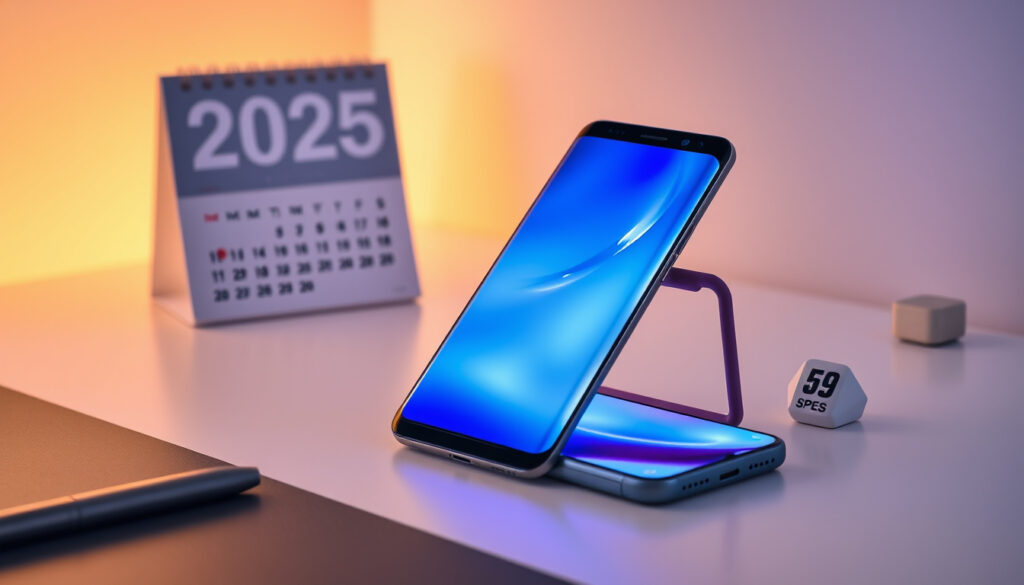
Samsung Galaxy S8: Specs, Support & Worth Buying in 2025
Eight years is a long life for any smartphone, especially one that stopped receiving official updates four years ago. If you’re weighing a Galaxy S8 as a budget option in 2025, you’re not just buying a phone—you’re inheriting a support gap that most buyers never see coming. This guide cuts through the noise with everything you actually need to know before handing over your cash.
Release Date: March 2017 · Display: 5.8-inch · Storage: 64 GB · Primary Camera: 12 MP · Front Camera: 8 MP
Quick snapshot
- Released March 2017 — over 8 years old in 2025 (YouTube: Galaxy S8 in 2025)
- Stopped receiving updates in 2021 on Android 9 Pie (UpTrade: S8+ Support Status)
- 5.8-inch display and 12 MP camera still hold up for basic use (YouTube: S8 Performance Review)
- Exact 2026 support cutoff for S8 remains officially unconfirmed
- Current trade-in values fluctuate by condition and regional market
- Precise custom ROM stability for daily use not independently verified
- March 2017: Galaxy S8 announced and released (UpTrade)
- 2021: Official support ended (UpTrade)
- September 2025: One UI 8 rollout begins — no S8 listed (Samsung India: One UI 8 Schedule)
- 2026: Potential further support cutoff window (UpTrade)
- Certified refurbished units largely out of stock by 2025 (UpTrade: S8+ Market Prices)
- Individual sellers still move units around $120+ (UpTrade: S8+ Market Prices)
- Galaxy S22+ emerges as the more sensible budget alternative at $150+ (UpTrade: S22+ Value Analysis)
The table below summarizes the hardware foundation Samsung built in 2017 — specs that defined flagship performance eight years ago but show their age against 2025 standards.
| Attribute | Value |
|---|---|
| Announced | Mar 2017 |
| Chipset | Exynos 8895 |
| RAM | 4 GB |
| Battery | 3000 mAh |
| OS | Android 7.0 upgradable |
| NFC | Yes |
Is the S8 still worth buying?
The honest answer depends entirely on what you need and how much you’re willing to compromise. For $20–30 at the low end, some buyers see genuine value in the premium build quality, the rare 3.5mm headphone jack, and a camera that still outperforms many 2025 budget phones. However, UpTrade advises against the S8+ specifically, citing security risks from running unpatched software in 2025.
Pros and cons in 2025
The Galaxy S8 still pulls a few punches: the OIS camera produces solid photos, DeX mode adds desktop functionality that newer budget phones lack, and the hardware design remains genuinely elegant by today’s standards. Samsung’s official repair page no longer lists fees for devices older than the S20, which points to genuine parts scarcity — a real problem if your screen cracks or your battery fails.
Upsides
- Exceptional build quality for under $50 used
- 3.5mm headphone jack — almost extinct in 2025 flagships
- 12 MP camera with OIS still outperforms budget competitors
- DeX mode for desktop-style productivity
Downsides
- Android 9 Pie — no newer apps without compatibility workarounds
- No 5G, limited to 4G LTE
- Zero official security patches since 2021
- Battery degradation after 8 years of use
- Parts scarcity makes repairs expensive or impossible
- UFS 2.1 storage slow compared to modern devices
Performance for daily use
After debloating the software, Galaxy S8 performance reportedly holds up well for light tasks — texting, calls, web browsing. The problem arrives when you need modern apps: banking software, Google Pay, and many games now require Android 12 or higher, which the S8 cannot run. That creates a catch-22 where the phone technically works but many essential functions simply won’t launch.
How old is the Samsung Galaxy S8?
Samsung announced the Galaxy S8 in March 2017, making it over 8 years old by mid-2025. In smartphone terms, that’s ancient — most devices are considered end-of-life after 4-5 years of software support, and Samsung’s own current policy guarantees 7 years for newer flagships like the S24 and S25 series.
Release timeline
The S8 launched as Samsung’s flagship for 2017, debuting the Infinity Display design that reshaped smartphone aesthetics for the industry. It shipped with Android 7.0 Nougat and received updates up through Android 9 Pie, after which Samsung cut off official support. The India One UI 8 schedule released in 2025 confirms no S8 eligibility, and Samsung’s own security page states the 7-year support policy applies only to select newer devices.
Age relative to current flagships
Comparing the S8 to Samsung’s 2025 lineup shows just how much the industry has moved. The Galaxy S25 series ships with Android 15, 5G as standard, and processors 6 generations newer than the Exynos 8895 inside the S8. One UI 8 rollout begins in September 2025 for the S25 and S24, with the S22 Ultra targeted for September 2025 — none of these schedules include the S8.
The implication is stark: Samsung’s extended 7-year support window for newer devices makes the S8’s 4-year support span look even more inadequate by comparison.
Samsung’s shift to 7-year security updates as of January 2024 (confirmed by Samsung Mobile Security: Official Policy) means newer flagships stay protected far longer than the S8 ever received. For buyers comparing used options, a Galaxy S22+ at $150+ with Android 16 support through 2028 represents dramatically better long-term value than an S8 for a fraction more.
Is the Galaxy S8 still supported?
Samsung ended software and security updates for the Galaxy S8+ in 2021, leaving it frozen on Android 9 Pie with One UI 1.0. The December 2025 roadmap refresh from SammyFans makes no mention of the S8, reinforcing that Samsung views this device as fully end-of-life. No Samsung software roadmaps in 2025 include the S8.
Software update status
Samsung’s official One UI 8 roadmap, published by Samsung India: Official One UI 8 Schedule, shows the rollout schedule for flagships. The Galaxy S25 and S24 receive One UI 8 starting September 2025, the S22 Ultra gets it in October 2025, and unlisted devices may see updates by December 2025 or early 2026 — but the S8 is not eligible under any current plan. Samsung’s own security page explicitly states the 7-year extended support applies to newer select devices, not the S8.
Security patches availability
Running a phone without security patches in 2025 is genuinely risky. Every unpatched vulnerability becomes permanent: banking trojans, ransomware, and data theft can exploit flaws that Samsung will never fix on this device. The endoflife.date: Samsung Support Table confirms no S8 support in current Samsung roadmaps, and Android Authority: Repair Analysis notes that Samsung’s repair pages no longer list pricing for S20-era devices and older, suggesting parts scarcity that compounds the security problem.
What this means is clear: the S8 will never receive another official patch, leaving any discovered vulnerability permanently exploitable.
Custom ROMs like LineageOS can upgrade the Galaxy S8 to Android 13, 14, or 15 — but this comes with trade-offs. Installing a custom ROM voids Samsung’s implicit warranty, removes Samsung Pay and other first-party integrations, and requires technical comfort with bootloader unlocking. For most buyers, this path is riskier than it sounds.
How do I update my Samsung S8 to the latest Android version?
For owners who already have a Galaxy S8, checking for updates is straightforward — though the news isn’t good. Samsung’s official update pipeline has no pending releases for this device. The last major update was Android 9 Pie, and Samsung has not issued any further operating system upgrades.
Step-by-step update process
To check your current software version on a Galaxy S8: open Settings > Software update. If an update exists, you’ll see a download option there. For the S8, this page will typically report that your software is up to date — because no further updates will ever arrive. Samsung’s Samsung India: Official Update Page confirms the One UI 8 rollout schedule, and the S8 does not appear on any current roadmap.
Latest available version
The Galaxy S8 maxed out at Android 9 Pie with One UI 1.0. No further major OS upgrades are coming from Samsung. Some community developers maintain custom ROM ports to Android 13-15, but these require unlocking the bootloader — a process that disables Samsung Pay, removes KNOX security features, and cannot be reversed. For users who need modern Android, the practical options are limited to buying a newer device or accepting the security risks of running outdated software.
The pattern here is inescapable: Samsung has closed the door on official updates, and custom ROMs offer a workaround at the cost of core functionality. For those interested in future cryptocurrency trends, an XRP price prediction 2025 may offer valuable insights. XRP price prediction 2025
The Galaxy S22+ emerges as the practical upgrade path for S8 owners who want modern Android without switching platforms. At roughly $150+ certified used (according to UpTrade: S22+ Pricing), it delivers 5G, Android 16 support through 2028, and full Samsung ecosystem compatibility — a meaningful step up from the S8’s end-of-life status.
How much can I sell my Galaxy S8 for?
If you’re looking to sell rather than buy, the Galaxy S8 market has thinned considerably by 2025. Certified refurbished units are mostly out of stock due to a combination of low supply and diminished demand. Individual sellers on second-hand platforms still move units, but prices and buyer interest reflect the device’s age and support status.
Current trade-in values
According to UpTrade: S8+ Trade-in Analysis, the Galaxy S8+ trades at roughly $120+ from individual sellers — but without certification, warranties, or battery guarantees. For sellers, this means negotiating from a position of weakness: buyers know the risks. The S8 variant without the plus designation fetches even less. Compare this to the Galaxy S22+, which commands $150+ certified used — a small premium for dramatically better specs and ongoing support.
Factors affecting price
Condition matters enormously for the S8 in 2025. A pristine unit with a healthy battery commands the highest prices, but battery degradation after 8 years of use is nearly universal. Screen condition, cosmetic wear, and whether the original box and accessories are included also influence resale value. The Samsung screen repair page no longer listing fees for older devices implies parts scarcity — a red flag for buyers that directly suppresses prices.
The implication: if you own an S8 in sellable condition, the window for getting any meaningful value is closing as parts become scarcer.
If you own a Galaxy S8, selling now while individual-seller markets remain active is more strategic than waiting. Certified resale channels have largely exited the S8 market, and parts scarcity will eventually make even damaged units harder to move. For buyers, spending $20-30 on an S8 only makes sense as a burner or secondary device — not as a primary phone in 2025.
Timeline
What we know vs. what we don’t
Four confirmed facts anchor this analysis: the Galaxy S8 released in 2017, stopped receiving updates in 2021 on Android 9 Pie, runs 4G LTE without 5G, and Samsung’s 2025 One UI roadmaps include no S8 eligibility. Three things remain genuinely unclear: whether Samsung will issue any final security statement about the S8, exact current trade-in values across regional markets beyond US estimates, and whether community custom ROMs will maintain security patches for the device long-term.
Confirmed
- Galaxy S8 released March 2017
- Support ended 2021 on Android 9 Pie
- No 5G support — 4G LTE only
- One UI 8 roadmaps exclude S8
- Galaxy S22+ certified used at $150+ outperforms S8 on every metric
Uncertain
- Whether Samsung will acknowledge S8 end-of-life formally
- Regional price variations for used units
- Long-term custom ROM security patch reliability
What the experts say
No — the Samsung Galaxy S8+ is no longer a smart or safe purchase in 2025.
— UpTrade (Reseller Analyst)
For $20–30, absolutely YES — it’s worth it for the premium build, headphone jack, and camera.
— YouTube Tech Reviewer
As of January 2024, we are extending our security update support for Samsung Galaxy devices by up to 7 years.
— Samsung (Official)
Summary
The Samsung Galaxy S8 occupies a strange corner of the 2025 market: genuinely well-built hardware that Samsung has entirely moved on from. For buyers on a strict budget who understand the trade-offs, $20-30 buys a capable secondary device or a first phone for a young user. Everyone else — anyone using mobile payments, running modern apps, or relying on their phone for sensitive work — gets a better deal by spending slightly more on a refurbished Galaxy S22+ at $150+. The Samsung security policy shift toward 7-year support for new devices makes the S8’s end-of-life status stark by comparison. For budget-conscious buyers in 2025, the choice is straightforward: pay a little more now for a phone that actually works, or save a little and inherit years of security headaches.
What is the Samsung Galaxy S8 display size?
Does the Galaxy S8 have NFC?
What chipset powers the Galaxy S8?
Can the Galaxy S8 use a memory card?
What network bands does the S8 support?
Is there a Galaxy S8 Plus?
What is the battery capacity of S8?
Related reading: Is Galaxy S8 Plus Still Worth Buying · What Samsung Galaxy Will Stop Working
While weighing the S8’s limitations, many turn to the Galaxy S10 refurb deals for noticeably better cameras and battery at comparable costs.
More related posts
 Opal Card Top Up: Online, Machines & Auto Guide NSW
 275 F to C – Accurate Conversion to 135 Degrees Celsius
 Belair National Park: Entry Fee, Koalas, Opening Hours & More
 Dr. Phil: What Happened? Downfall, Net Worth & Oprah
 Ayatollah Khomeini: Biography of Iran’s First Supreme Leader
 Nora Fatehi: Facts About Her Relationship, Religion, Ethnicity
 Norah Jones: Biography, Husband, Father, New Album 2024
 What Is Leave Loading – Eligibility, Calculation & Payout Guide
